
First Responders

In February, I was in a bad car accident. Driving from babysitting to my friends’ house in the suburbs, I accelerated through a green light. A drunk driver ran a red light, t-boned a car who then hit me. It was the first car accident I was in. Within minutes I could hear the police sirens. An officer arrived, made sure I was okay, and shifted gears to evaluating more urgent matters. Truly, the first responders, police officers and firefighters, kept me safe, calm and warm on the cold and scary February night.

As I sat in my car, it became clear to me pretty quickly that I wasn’t driving my car to my friends’ house anymore. I would end up having to crawl over the console to even get out of the car. My contact flew out of my left eye because of the contact. Before I called my parents who were two hours away, I knew I needed to call someone else. Someone who could come to me quickly. I needed my personal first responders.

The friends who came to get me that night were the BEST. They were in for the night, so they showed up to the scene with glasses on, one step away from their pajamas. He took pictures of the aftermath of the accident. She greeted me with a big hug and kept me company until we were ready to leave. They made sure I had everything out of my car. Once we got to our destination, they prayed for me and helped me come up with a plan for the next day.

The other set of friends (whose house I was headed to) called quickly after hearing what happened and said, “We think it’s a good idea if you still stay with us tonight. We’ll take care of you, and get you everything you need tomorrow, too.” And they did just that.

My first responders weren’t just my local friends. I had an out-of-town friend offer to call while I wanted for my friends to arrive. Another out-of-town friend called the next day to check-in.

All I had to do was ask for a ride on Monday morning to pick-up my rental car, and another friend stepped in to help. Texts came throughout the week. Church folks offered to go car shopping with me.

Reflecting on the countless ways that my friends stepped up for me in the week following the car accident challenged me to think about what it means to be a first responder.

Am I willing to let myself be inconvenienced on behalf of someone else? 

It’s not usually convenient to be a first responder. You have to get some place quickly, and with little notice. If I’m only wanting a friendship for the moments that are easy, fun and Instagrammable, I’ll never be willing to put someone else’s needs ahead of my own.

Have I communicated that I’m ready to spring into action for someone before an emergency even happens?

The same friend who showed up at the scene of the accident is listed as my work emergency contact. We both have out of town family, and I asked her if it was okay to list her, she did the same for me. When she (and others) have shared that in an emergency, they didn’t know who to call, I’ve tried to say, “In the future, I’d be able to be there.”

Am I consistency reliable? 

Trust is built one moment at a time. These were not new friends to me. Over the past five years, we’ve become increasingly comfortable asking each for things. Have there been times when we’ve been too busy to hang out? Yes. Reliability isn’t the same as availability. I knew that they would come because they’ve also been the friends to help me when I move and my people who check in on me when my parents have been sick. I hope I can be the same kind of friend back to them.

Do I offer to help even when the need doesn’t seem urgent? 

Usually the first time someone calls you for help it’s not going to be an emergency. It may be a passing comment about how there’s someone sick in their family. Or how their ride to the airport fell through. Or that their husband is out of town for multiple days over the next several weeks. Those are small opportunities to build trust over time, to become someone who they would call in an emergency. Eventually, they’ll become comfortable enough to ask for something that not urgent, and then hopefully something that’s bigger and more immediate.

It’s okay if you’re not a first responder to friend who you would hang out with on a Saturday night. That level of vulnerability and reliability takes time and energy to cultivate. It’s likely that you have several friends who you either consider to be first responders or you can identify as having that potential. Take time to invest in those relationships. Communicate that you view them as such. It’s also okay if your short list of people shifts over time. That’s only natural, too.

We become the first responders in each other’s lives by responding. Best friends are not born overnight. The trust is built throughout years and by showing up. Over time, we prove our self as reliable and able to be counted on in someone’s most vulnerable moments.
How to Make the Most of Living With Roommates

I’ve lived with over a hundred women. No, I’m not the worst roommate who sends others running for the hills, nor do I move frequently. I’m actually a fairly normal twenty-something. I lived with one hundred other female students in a sorority house for two years in college, and then shared a picturesque college town house with four of the same sorority sisters. I then moved into an apartment with two roommates right after I graduated. They were both engaged within a year, so two new women moved in. I now live in an adorable bungalow with three other friends.  

My roommates have seen a side of me that few other friends have seen. They know that my purple fleece pants are my favorite item of clothing for laying on the couch, that I’d rather not speak to anyone until at least nine in the morning, that I don’t love to work-out with other people and that nothing sounds better to me after going to the gym than eating Chick Fil-A.

I’m far from a perfect roommate. I’m pretty messy, I am a verbal processor, I can keep weird hours and I covet alone time, but I like to think that I’ve learned some important lessons along the way. While others have worked towards living alone, I’ve grown to see the benefits of living with others.

Choose When to Speak Up

I currently live with three other girls. While we care about each other, one small annoyance about Roommate A expressed to Roommate B can turn ugly quickly. Unfortunately, that’s the nature of gossip. Some annoyances are good to speak up about, but others will be quickly forgotten. It’s important to know the difference. When I’m frustrated it helps to remind myself that if I don’t want to confront a roommate about something directly, then I need to drop it and move on. 

Learn What Each Roommate Values

I spent months worrying that the messy bathroom upset my roommate, but did not think twice about leaving my cereal bowl in the sink. Then after asking her, I found out that the dirty bathroom didn’t bother her, but keeping the kitchen clean was of the highest importance. It’s been a win, win situation because I can focus my efforts on what matters most to her, and worry less about toothpaste residue in the sink.  

Learning what a roommate values goes beyond knowing that she likes a clean kitchen. Like you would with a good friend, seek to learn what your roommates like after a hard day at the office – coming home to quiet or going out for dinner. Nothing shuts me down quicker than voicing my frustrations and a roommate responding with advice. When I’m frustrated, I don’t want someone telling me what to do; I either want empathy or silence. Getting to know your roommates, asking intentional questions and observing their reactions to different situations will help you better care for them.

Communicate Your Expectations

Home should be a safe space; a place where your needs are met, and where you can experience rest. This cannot happen unless you are open with your roommates about personal space, cleanliness standards and boundaries when it comes to sharing food. Some roommates set ground rules at the beginning of living together to clearly set out rules or expectations. Depending on your home’s need for structure, it may be helpful to write out these rules and post them in a public place.

The following topics should be discussed either leading up to moving in together or in the first month: overnight visitors, noise levels, cleaning responsibilities and paying bills.

Ask For Forgiveness

You will inevitably break a wine glass, shrink a favorite shirt, forget to take the trash out or hurt a roommate’s feelings. Believe me, I’ve done all of the above. Be quick to apologize. Some apologies are easier than others. Our homes are where we are able to live out grace, to apologize and to forgive. If you learn to practice forgiveness with those closest to you, this practice will follow into other areas of your life.

Seek To Out Love One Another

It’s human nature to want to make household responsibilities fair. In every living situation I’ve been in, during a hard week, someone starts keeping score. It sounds something like this:

 “I’ve taken the trash out the past four weeks.”

“No one else ever empties the dishwasher.”

“Roommate A always leaves her dirty dishes on the coffee table.”

Full disclosure: that someone who keeps score is often me. Unless your roommate is the worst, chances are, he or she is doing things that you are unaware of. No one wins when you keep score. Instead, make it your goal to serve more, love bigger.  Like forgiveness, servant-heartedness will follow you into your office and into your church.

If enjoying the roommate experience sounds a lot like being a good friend, that’s because it is! Hopefully you like spending time with the person who you are living with so it is fun, and you are able to build a friendship. Whether it’s a short-term or long-term experience, living with a roommate can be a great experience when you adopt the correct attitude and desire to make the most of it.

Restoration

Last spring, I messed up pretty publicly. It was the kind of mess up that you you wake up the next morning full of conviction and maybe even some shame. It didn’t help that it was at a wedding with so many of my college friends. Everyone saw me in one of my lowest moments. I was a train wreck that no one could look away from.

I spent the whole next day crying because I was embarrassed, and sad. I had no one to blame but myself. This mess up was something that used to be a pattern in my life, but I thought that I had moved past it. Truly, it rattled me to my core.

I remember the conversations in the couple of days after this public mess-up. I called my best friend, apologized for my behavior and asked her who else I needed to apologize to. I confessed to my roommates what I had done. It was almost as if I wanted everyone to know what happened so I could move on and forget it. I continued to be shocked by the responses of each of my close friends.

In my self-condemnation haze, I couldn’t remember what was true of me. I felt as though I was a sum total of the mess-up.

Yet with each person, I was met with grace.

Grace that I didn’t feel worthy of because of my mess-up. Grace that acknowledged what I did was wrong, but didn’t permit me to continue on in my shame. Grace that restored me back to what’s true of my identity.

One of my roommates spoke the sweetest words over me as I shared what I did and how I was feeling about it. Standing in my kitchen, she said, “Caitlin, God is pleased that you confessed this to Him. You are forgiven already. He just wanted you to come to Him.”

I’ve mostly broken myself of my perfectionist tendencies. But every once in a while they rear their ugly head. Usually it’s when I mess up. I often live my life in a way that says I believe that grace gets me 99% of the way to the finish line, but the last 1% is all me. So when I mess up, I cannot finish. I failed. My mistakes, especially the public ones, can damage my heart on a deep level.

Thankfully, I have incredible friends who continue to be my friend even when I mess-up, and restore me back to my right place. When I feel defined by my behavior, they remind that my identity is much deeper than one night’s mistake.

But the restoration can only come when we’re aware that we need to be restored, and when we ask for it. When I’ve felt the most disappointed in friendships, it’s when I’ve been the least vulnerable. Thankfully, last spring when I needed my friends to remind me of who I was, I was open enough to confess the mistake so that they could be part of the restoring.

Grace is freely available, but you do have to ask for it. Friendship can be part of the restoration process, but you do have to be open about your need.

Resolving Conflict

Leadership development books love to tell the story of the employee who makes a very costly mistake. The employee approaches his boss, sure that he’s going to be fired, but is met with something else instead. The boss says, “Why would I fire you? That money we just lost was a costly investment in your career.”

I’ve seen this same concept be true in friendship. Hurt, mistakes or even just miscommunication with a friend usually has me looking for an escape plan. Thoughts run through my head. How can I untangle my life from that person’s? How can we part ways gracefully?

But honestly, just like the boss sees the costly mistake as an investment, in friendship, conflict is an opportunity to deepen the friendship.

Let me stop and note right here that I’m not talking about toxic relationships where there is abuse on either side, but instead in situations where there is hurt that cannot be ignored, but that can be worked through. There may also be times when we need to walk away from a friendship, that is also okay, but I believe that we too often walk away from a hard situation where forgiveness is waiting on the other side of some difficult conversations.

It could be easy for someone to read through my 31 days on friendship and think that all my relationships are perfect. But that’s far from true. I’ve walked through relational conflict with almost all of my closest friends. I’ve got quite a few close friends, so my relational conflict has been abundant. In fact, there was a season that it felt like I wondered if the problem was me. Was I the person who was hard to be friends with? Maybe. Probably.

What I have almost always seen be true is that on the other side of seasons of relational conflict are deepened friendships. Once you’ve walked through something hard with a friend, you have more on the line to continue to invest in.

I’ve picked up a helpful tool in talking through hurt. It’s three easy words. Observation, interpretation, and clarification. I’ve found this model to be especially helpful because it assumes the best about the other person. And in resolving conflict, it’s often fruitful to walk into a conversation with humility; knowing that you could be in the wrong and wanting to fix it.

Here’s how a conversation could work:

First you observe. “Hey Jane, I’ve noticed that you frequently interrupt me when I’m talking.”

Then you interpret. “When you do that, it seems like you don’t value what I have to say.”

You finish by asking for clarification. “Can you speak into that a little bit?”

Obviously this is an overly implied situation. But the language is helpful to guide relational conflict to a resolution.

Conversations about hurt or where miscommunication has occurred are difficult. As our culture gets increasingly afraid of anything that hurts, our friendships will get progressively worse. It is vital that we start to be willing to walk through conflict in a friendship. You may just find that by willing to have difficult conversations, you’re not only resolving conflict, but investing in a friend. Perhaps a strengthened relationship is an bonus outcome.

Friends Who Shift Our Focus

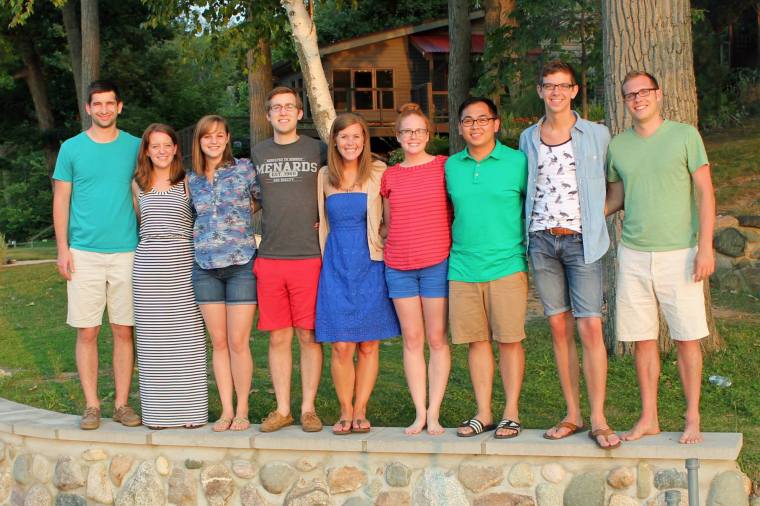
Each summer, some of my college friends spend a weekend at a lake in Northern Indiana. It’s come to be known as Lake Weekend, and usually falls towards the end of the summer. Each year it’s a blast, and an amazing time to reconnect with people I only see a couple of times a year and a good change of scenery even for friends I see on a day-to-day basis.

As with any tradition, the first year we had the smallest group. There were nine of us in this beautiful lake house for the weekend. I was almost a year into my job, one full year out of college, and still wrestling with my life not looking like I wanted it to look. There were some periods where I was working thirteen days in a row, both my roommates were either engaged or almost engaged, and it felt like everyone else had things figured out. I walked into the weekend pretty drained. Worse, I didn’t have hope that things were going to get better.

Saturday night after dinner, all nine of us jumped on one of the boats. All it took was one question, “How are you doing?” to begin a time of sharing. I’m usually the first to share. I like to set the tone, and I’m a verbal processor, so no matter how much time I have to think about something, it will usually come out the same way. But this night was different. In the midst of all of my friends who seemed to be thriving, I didn’t want to be the one who was uncertain.

When it was finally my turn to share, I’m sure I fumbled through an answer about how discontent I felt at my job. I remember saying something about how I wasn’t experiencing joy regularly, too. In my mind, these two things were inner-connected. Being unhappy at my job was clearly preventing me from experiencing joy in my life. A friend responded with a question that shifted everything. He asked, “Caitlin, when have you experienced joy in the past year?”

I probably answered something in the moment about community, but the question triggered more than an immediate response. That next week, I went home and wrote down all the things that brought me joy. Reading, writing, cooking, running, and throwing parties all made their way onto the list.

I took that list and looked critically at my weekly schedule. Even though I was working almost sixty hours a week between both of my jobs, I tried to incorporate some of these joy-giving activities into my weekly schedule.

At my healthiest, I’m a big picture kind of girl. I dream, I plan, I create. But, when I’m overwhelmed, I get tunnel vision, and can’t seem to see past the struggle of the day. The simple question asked by a friend, was the act of lifting my chin. It forced my eyes from my feet to the road in front of me.

Even more than shifting my gaze, my friend’s question helped me see my life more holistically. I could still struggle with feeling unfulfilled at my job, but experience joy in relationships, through reading books and trying new recipes.

That was three years ago. We’ve returned to the lake three more time since then. Of that original nine people, three have gotten married (two to each other), we’ve welcomed two babies, celebrated two graduations, with one more to come, bought two houses and a lot of us have gotten new jobs. Today I love my job, truly, even though I’ve gone through seasons more recently when I haven’t. But I’ll always come back to that simple question asked by a dear friend as defining moment that changed me. 

Friendship has this unique ability to force us to see beyond what’s right in front of us. Community allows us to dream bigger, create better and live more fulfilled lives, if we let it.

10272655_10152379677098842_7923518153177397472_o

My Favorite Books on Friendship

I’m an avid reader. I do read more in some seasons and less in others, but if you see me with a book, it’s most likely a non-fiction book. I love real life stuff. No escapism here in my reading material… only in my Grey’s Anatomy watching. So, in honor of my month on friendship, I’ve decided to share with you my favorite books on the topic.

All of Shauna Niequist’s books have essays about friendship. I really could have picked any of them as a favorite book, too. But, Bread and Wine is the most fitting because it’s her love letter to life around the table, and for Shauna, the table is where she meets with her people. The book contains recipes, stories and practical application for how to build community. I was encouraged to love better and live more authentically after reading Bread and Wine. (If you’re looking for another book by Shauna Niequist about friendship, both Bittersweet and Present Over Perfect are must-reads. Both are full of essays that challenged me into deeper relationships with those closest to me.)

Living into Community by Christine Pohl was an important read for me last year. The author focuses most of the book on four practices to cultivate and live into community. Gratefulness, promise keeping, truthfulness and hospitality are the four practices that Pohl highlights. This book is a true gift because of it’s deeply biblically based ideas and practical application points. A year after reading the book, I’m still struck with the idea of Jesus giving thanks in the context of community, and how grace is tied to gratefulness.

Deepening Community by Paul Born is a timely book about finding joy together. It’s a secular view of how community is formed and deepened. Born’s look at community examines how people develop a sense of belonging to one another, starting with a shared story and eventually joining together towards a common purpose. His work and stories challenged me to think about how my own friendships could be deepened, namely, what narrative do we share with one another, and what are we working towards as friends.

Frientimacy by Shasta Nelson is a recent favorite book on friendship. I “met” the author on a podcast and I couldn’t stop thinking about the way she talked about intimacy, specifically intimacy in friendship. She talks about how loneliness is an epidemic facing our culture today, and that in fixing loneliness (through friendship), we see our overall health improve. She has a very fascinating question that she asks women, and I’ve started asking my own friends, “On a scale from one to ten, how lonely are you?” It’s helped me better understand how I can be a better friend and what their needs are.

No list of friendship books would be complete without Dietrich Bonhoeffer’s Life Together. This short book packs endless wisdom and biblical truth into about 100 pages. Much like Paul’s letters written to churches who were experiencing suffering, Bonhoeffer gets right to the point in the very beginning of his friendship narrative by saying, “It is not simply to be taken for granted that the Christian has the privilege of living among other Christians.” He goes on to say, “It is grace, nothing but grace that we are allowed to live in community with Christian brethren.” Bonhoeffer lived in a time when the cost of following Christ was especially high. In times of oppression, the importance of Christian fellowship is heightened.

Friendship & Singleness

I’m twenty-six years old and unmarried. In Christian circles, my empty left ring finger and I stand out, and even if we’re not noticed right away, we usually make ourselves known in the first couple minutes of a conversation. I’ve mastered the question progression. It usually sounds something like this:

“What do you do?”

“Do you have kids?”

“Are you married?”

We’re working through it, my empty ring finger and I. We’re trying to let our guard down quicker, and be vulnerable even when we wish we could just stand there are talk all about where our kids go to school. Some days are easier than others. Some seasons are easier than others. But I also know that God is only good, and can use my experience in the lives of others.

And He truly has. Last fall, I wrote significantly on being single. Even just reading the words now brings tears to my eyes. I felt so hopeless that I could feel a part of community or that I would be seen as someone who had something to bring to the table. In the past year, I’ve watched God use my loneliness to comfort others. I’ve watched God use my free time to enable me to pour into the lives of others. I’ve watched God put me in places where my unique experience has been valued.

But, I still think the application points I shared last fall about living life alongside others who in other seasons of life is vital. When Jesus called us to live in community with one another, and when we look at how the early church lived, it’s clear they didn’t segregate themselves by season of life.

Here are some starting points:

  • Reach out to someone who is in a different stage of life than you. Maybe before you reach out to them, say a prayer and ask God to share with you some truth about them that you can pass on. Maybe it sounds like this, “God put you on my heart this morning, and whatever you’re walking through, remember, He hasn’t forgotten you. He sees you, knows you, and loves you.”
  • Enter into the celebration and the mourning. It feels like a non brainer that when a spouse is out of town, the other spouse needs help with the kids, and may need help with meals. But traveling is hard on singles, too. So is loss. Remember birthdays and anniversaries, if you can remember to send a card, even better. Celebrate promotions and steps of faith. Communicate your needs to people so they know how they can come alongside you. Keep showing up.
  • When you ask questions of someone, ask about them as an individual. Don’t ask first about their kids or their spouse, begin with them. How are they doing? What are they feeling? How can you be praying for them?
  • Start by being vulnerable in your own responses. If the real answer to the question of how you’re doing is lonely, say it. I think you’ll find that your vulnerability, however painful, gives someone else the gift being vulnerable, too. If you’re the mom or the wife, avoid making how you’re doing about someone else. I want to hear about your kids, but I asked about you. Let’s start there. It’s discouraging to a single person when they’re vulnerable on a heart level and it’s met with an anecdote about your child.
  • Be unafraid of the awkwardness. I’d rather be a fifth wheel a hundred times than not be invited because of how it may make me feel. And I think my married friends would say that they’d rather be invited knowing they’d be the only married couple in the room than be excluded. Keep inviting the new parents; let them decide for themselves if they can come.

Did I miss some important stuff? Probably. So I’d love to hear where your starting points are. Maybe you’re not single, but you’re the first married couple in your friend group; how do you feel cared for and included? Maybe you have been well cared for by friends in a different season of life. What has that looked like?

The stakes are too high for us to keep getting this wrong. Let’s lean in, friends. Let’s shoulder this kingdom responsibility side by side regardless of if there’s a ring on your left hand.

Friends Help You Do Hard Things

I’m in the midst of half-marathon training. I’ve run three half-marathons, and they never really go as well as I think they will. Truly. I have the best intentions when I start training. I buy some fun new training clothes and make sure that the shoes I have will last me through the race.

But after about eight weeks, the enthusiasm for the training wears off and I’m ready to be done running. I start slacking off, I find excuses not to run, and by intensive purposes, I’ve quit before the race is even arrives.

So far, training for this one has been different. Because I’m training and running it with one of my best friends.

During one of our recent long runs, I told her I needed to walk. We hadn’t really gone that far yet, so I gave the excuse, “We started out really fast.” 

Now that’s a great excuse for someone who doesn’t run with you often, but since we run a couple of times a week together, she immediately realized exactly what I was going – making an excuse to quit. 

This starting out fast, with energy, and giving up when the enthusiasm wears off is pretty classic Caitlin. I put my heart and soul into the beginning of projects, but struggle to finish them because I simply just don’t feel like it. Follow-thru is not my gifting. This friend knows me well enough to know this is how I operate.

She also knows just how much I’m capable of. She knows that I desire to be a woman who perseveres through the hard stuff. She wants what’s best for me, and knows how hard to push me. In fact, as we train for our runs, we dream about the kind of women we want God to mold us into, and the things we’re eager to achieve that require persistence.

So she responded, “You’ve run farther than this faster than this. If you really need to walk, we can, but if it’s a mental thing, you’re going to push through it.”

Thankfully, her encouragement was enough to make me keep running. I ran another mile and a half without walking. It wasn’t my best long run, but that’s okay. I kept going when I wanted to stop. Because a friend made me keep going. She made me keep going because she’s in it with me for the long-haul. She cares about this half-marathon, but she cares even more about the other hard things I’m going to come up against in my life. She knows that if I’m really serious about my dreams, it’s going to take grit to get there, and she is willing to help me practice so that I’m used to doing hard things. 

I’m tempted to say that relationships are especially important to me because of my tendency to burnout quickly, but honestly, we all need friends who wouldn’t let us quit on them or more importantly on ourselves. It’s important to invite our friends into our long-term dreams so that when the going gets tough, they can remind us what we’re ultimately fighting for. I love to run, really and truly, but if training was just about running, I would have given up on many long runs. Instead, I remember and my friend helps to remind me that running thirteen miles isn’t as hard as parenting a child who has experienced trauma or staying in a hard marriage. Running is simply a vehicle to develop perseverance in me. And I desperately need friends around me who will come alongside God in the cultivating of that endurance and perseverance. 

Not only do I need friends who challenge me when I want to give up, but I want to be a friend who encourages others when they want to give up. I long to be a cheerleader not just when the times are easy, but especially when the times are hard, when the days feel impossible and when the heart is weary.

There will be difficult miles, endless weeks and dark seasons. Friends keep us going. Friends remind us what we’re capable of accomplishing. Friends help us do hard things.

IMG_1431

Jesus & Peter

Redemption. It may be one of my favorite parts of being a follower of Christ. I know it’s definitely one of the things that gives me hope. As a Christian, I firmly believe nothing is too bad to be forgiven. Nothing.

We get a picture of this in Jesus’ resurrection from the dead, but also in how He interacts with Peter.

Let me introduce you to Peter. When we first meet him, he’s catching fish. Then Peter meets Jesus, and Peter immediately begins to follow Him. He’s pretty impulsive, Peter. Throughout Jesus’ ministry, Peter seems to get himself in trouble by opening his mouth and at times failing to see the bigger picture. (Are you realizing why Peter is my favorite?)

At the end of Jesus’ life, after traveling around with him, and being part of his inner circle for years, Peter betrays Jesus. In fulfillment of prophesy. But also because he’s afraid. Most times we hurt people, it’s out of fear, right?

So Jesus dies, rises again, and Peter goes back to fishing. Yes, he returns to his original life. Probably out of shame and uncertainty; he tries to go back to the life he was living before. Even though he know’s there’s a better life for him. At this point, you’re probably wondering why this is a in a series on friendship. Hold on, I’m going to get there.

Jesus, back from the dead, meets Peter and some of the disciples on the shore. Remember Peter was back to being a fisherman. Performing yet another miracle, Jesus provides those on the boat “an amount of fish so great that they couldn’t haul in their nets,” (John 21:6). They head back to land and eat fish with Jesus.

Then Jesus does something special for Peter. He says to Peter, “Peter, do you love me?” Peter responds, “Yes, Lord, you know that I do.” Jesus proceeds to ask the question three more times. Which is the exact number of times that Peter denied Him earlier in the story. In essence, Jesus gives Peter a re-do.

Jesus comes back from the dead, to demonstrate that God has power over the dead, and while He’s at it, He restores Peter to right relationship with Him.

But He doesn’t stop there. Jesus gives Peter a mission to feed His sheep. The subtext in this command is Jesus saying to Peter, “Remember I changed your life? Don’t go back to fishing. I called you to care for my people. So do it!”

There’s a whole lot more going on in this story that I love, and I’ve written about it before, but truly, it’s a story of forgiveness, restoration and redemption through relationship.

Peter has abandoned Jesus. Peter went back to doing what he was doing before.
Jesus comes to Peter right where he’s at, even though it’s in a place of disobedience.

Jesus gives Peter the opportunity to make the situation right again.

Jesus reminds Peter of who he is. Jesus puts Peter back on mission.

Peter went on to be a major player in early Christianity. He is the author of several books in the New Testament including 1 Peter, a letter written to Christian exiles who were experiencing persecution. He was eventually crucified for his faith. His words and life have inspired countless people to persevere in their faith, especially in seasons of oppression. 

All because his friend (and Lord) Jesus called him to something more. More than fishing. Again and again. Even when Peter failed to live up to the calling, and betrayed Him; Jesus restored him.

Jesus calls all to come and follow Him. He invites us all onto His mission in unique ways, specific to who we are. Just like Peter, He promises that by the time He’s done with us, we’ll be different people with a new calling.

This is the power of friendship. To meet people in their darkest moments, to wade into their shame, remind them of who they are, and set them back on mission.

“Hi, My Name is Caitlin…”

Before my first day of preschool, my parents gave me a pep-talk. They wanted to make sure that I knew how to engage with all of the other students in the class. So they instructed me to use the following question, “Hello, my name is Catie. Will you be my friend?”

Those exact words were how my parents prepared me for my first day of preschool.

They could have reminded me to obey my teacher.

They could have told me to chew with my mouth closed during snack time.

They could have figured out how to style my short bob haircut so that I looked less like a boy.

They could have done a lot of other things to prepare me for my first day of preschool, but they told me how to make a friend.

I like to believe it’s because my parents knew that friendship mattered more than obedience, manners and a haircut.

It mattered more then to four year-old Catie and it matters more now to twenty-six year-old Caitlin.

Friendship matters because we desperately need companionship as we navigate life through its highs and lows. Friendship matters to us as individuals, to us in communities and to our Creator God. 

In a culture that is increasingly individualistic, it can be easy to believe the lie that you can go at it alone. That no one will truly understand you. That your career alone is enough to satisfy you. Be careful, though, because this lie can and will ruin you. You will walk deep into isolation.

We were never intended to walk this life on our own.

That is why in the Garden of Eden, God said, “It is not good for man to be alone,” and He created Eve. Yes, as a marriage relationship, but for companionship. Our Creator God saw it fit to make a person to save Adam from loneliness, and to partner with Adam throughout his life.

The need for friendship is not a sign of weakness. In fact, before anything in the world had been broken, Adam still needed a person. Needing people is not a result of brokenness, but a part of a perfect world.

It seems fitting that we would be tempted to walk life alone, since we’re often tempted to do things exactly the opposite of what God wanted. God intended us to walk it in companionship. To be truly known by someone. He knew this was the best way for us. He knew being alone was dangerous, destructive, deadly; so He created us for each other.

We can demonstrate God’s love to a watching world through our friendships. The way I love those closest to me should be my greatest witness to others. Yes, how I rise up for those who I don’t know and have nothing to offer me in return is so very important, but daily have the opportunity to love my people, and to let myself be loved by them in return.

Companionship saves us from loneliness. Relationships fill a space in our lives and our hearts that cannot be filled by careers, possessions or recognition. Friendship also draws our eyes to a world that will be made right.